


Page 2 - ln1
P. 2
Figurative language is when you use a word or phrase that does not have its normal everyday, literal meaning.
          Writers can use figurative language to make their work more interesting or more dramatic than literal
          language which simply states facts.


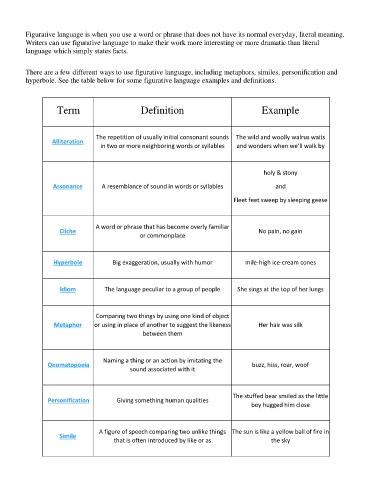
          There are a few different ways to use figurative language, including metaphors, similes, personification and
          hyperbole. See the table below for some figurative language examples and definitions.


                    Term                        Definition                              Example


                                 The repetition of usually initial consonant sounds  The wild and woolly walrus waits
                  Alliteration
                                  in two or more neighboring words or syllables   and wonders when we’ll walk by


                                                                                        holy & stony

                   Assonance       A resemblance of sound in words or syllables             and

                                                                              Fleet feet sweep by sleeping geese


                                 A word or phrase that has become overly familiar
                     Cliche                                                            No pain, no gain
                                               or commonplace


                   Hyperbole          Big exaggeration, usually with humor        mile-high ice-cream cones


                     Idiom          The language peculiar to a group of people   She sings at the top of her lungs


                                 Comparing two things by using one kind of object
                   Metaphor     or using in place of another to suggest the likeness   Her hair was silk
                                                between them


                                   Naming a thing or an action by imitating the
                                                                                    buzz, hiss, roar, woof
                                            sound associated with it
                 Onomatopoeia


                                                                              The stuffed bear smiled as the little
                                        Giving something human qualities
                                                                                    boy hugged him close
                 Personification


                                  A figure of speech comparing two unlike things  The sun is like a yellow ball of fire in
                     Simile
                                       that is often introduced by like or as              the sky

