


Page 1 - MM
P. 1
Lesson-4 Major Landforms
Mind map
Deserts:
Plains:
vast areas of sand.
Mountains: formed by rivers that rise Plateaus- tablelands River: 1. receives less
in the mountains and flow 1. low plateaus- farming
1. scanty vegetation down. region and high plateaus- starts from rainfall.
2. experiences
2. thinly populated 1. silt makes the plain cattle and sheep rearing mountains and ends extreme climatic
in a sea or an ocean.
3. natural barrier very fertile and suitable 2. extremely large and condition
covers hundreds of
against cold and hot for agriculture kilometres. Three stages:
winds. 2. Thickly populated 1. Upper or Youthful 3. limited plants and
3. rich in mineral animals.
4. rich source of 3. good transport resources. stage
4. Two types of
minerals. facilities, availability of some have deep canyons. 2. Meture stage desert- cold and hot
great tourist spots. water and rich fertile soil
makes the 3. Old stage 5. Sand storms are
common here and
sand dunes are
formed.
Notes:
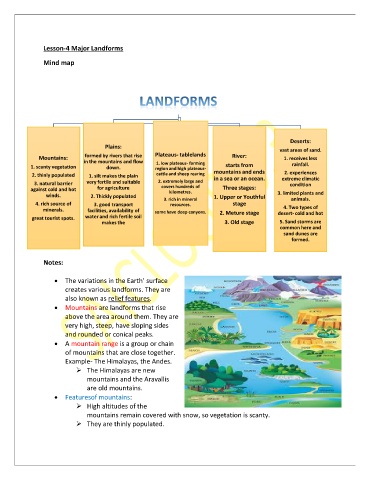
The variations in the Earth’ surface
creates various landforms. They are
also known as relief features.
Mountains are landforms that rise
above the area around them. They are
very high, steep, have sloping sides
and rounded or conical peaks.
A mountain range is a group or chain
of mountains that are close together.
Example- The Himalayas, the Andes.
The Himalayas are new
mountains and the Aravallis
are old mountains.
Featuresof mountains:
High altitudes of the
mountains remain covered with snow, so vegetation is scanty.
They are thinly populated.

